

 English
 Français
 Español
 عربى

A suitcase can leave the production line in good condition and still arrive with avoidable damage if its packaging does not suit the product's structure. For wholesale luggage orders, packing preparation involves more than choosing a carton. The case dimensions, projecting hardware, protective materials and shipment configuration all need to be considered before the goods are dispatched. ABS Spinner Luggage requires particular attention to how the complete suitcase is positioned and protected inside its packaging.
Carton Planning Starts With the Finished Product
The dimensions of a finished suitcase determine how efficiently it can be packed. A carton that is too tight may put pressure on the shell or exterior components, while excessive empty space can allow the case to shift during handling. Both conditions can increase the risk of damage during transportation.
When preparing an ABS Spinner Luggage order, buyers should confirm the finished dimensions of each model rather than relying only on nominal suitcase sizes. Exterior measurements need to account for components that extend beyond the main shell, including wheels, handles and other fitted hardware. These details affect the space required inside the carton.
Different sizes may also require different packaging specifications. A carton suitable for a compact case should not automatically be used for a larger model. Confirming the packaging dimensions against the approved sample helps prevent last-minute changes when the order is ready for shipment.
Protect Areas That Project Beyond the Shell
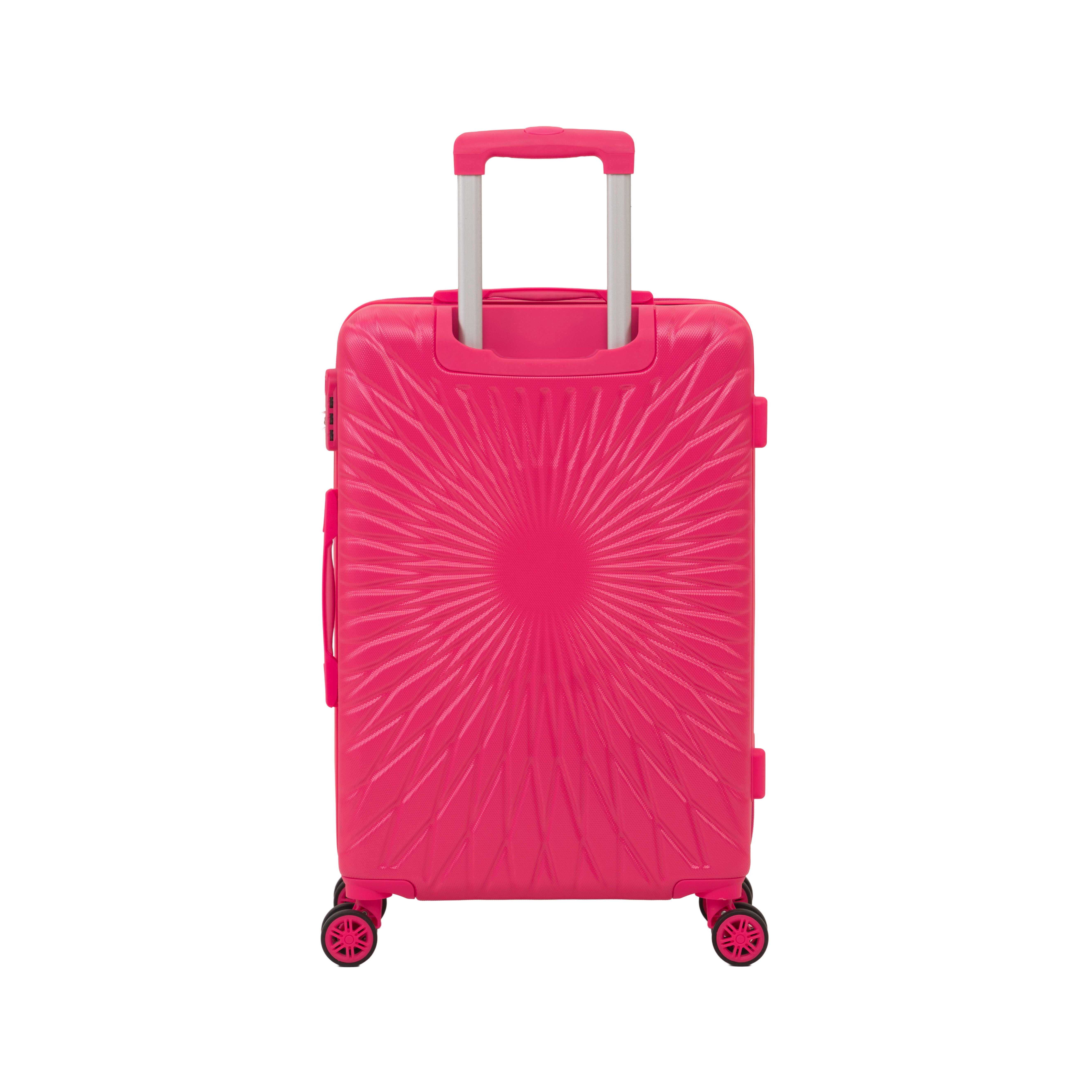
A hard-shell suitcase has several external components that may contact the carton during packing or transport. Spinner wheels, corner areas, handle housings and other fittings can create pressure points if the case is positioned incorrectly. The packaging should hold the product securely without placing unnecessary force on these areas.
For ABS Spinner Luggage, protective material should be selected according to the product configuration and the expected shipping conditions. A protective sleeve may help reduce surface scuffing, while suitable cushioning can help limit movement inside the carton. The exact arrangement depends on the suitcase design and the packaging specification agreed with the supplier.
Protection should also be checked after the carton is closed. If the suitcase moves excessively inside the package, the internal arrangement may need to be revised. If the carton presses directly against a vulnerable component, additional clearance or a different protective insert may be necessary.
Coordinate Packaging Across Multiple Sizes
Wholesale orders often include several suitcase sizes within one product range. Each size may have a different carton dimension, packing method or shipping quantity. These differences affect warehouse space, pallet arrangement and the information needed for shipment planning.
Buyers sourcing ABS Spinner Luggage in multiple sizes should request a clear packing specification for each model. Useful details include the carton dimensions, packing quantity, gross weight and net weight where available. Confirming these figures before production is complete helps purchasing and logistics teams estimate storage and freight requirements more accurately.
If the order includes coordinated sets, buyers should also clarify whether the suitcases will be packed individually or arranged together. Nested packing may be possible for some configurations, but it should not be assumed without checking the actual product structure and packaging method. The approved packing arrangement should be reflected in the order documents.
Check Packaging Details Before Bulk Dispatch
Packaging approval should be treated as part of the order specification rather than an afterthought. A sample carton or packing reference can help both parties agree on how the suitcase is protected, positioned and identified.
For an ABS Spinner Luggage shipment, the review may cover the carton condition, internal protection, product identification and consistency between the packed item and the order. If the buyer requires branded cartons, labels, instruction sheets or other customized packaging, these requirements should be confirmed before the packaging materials are prepared.
The manufacturer should also clarify which packaging options are available for the selected model. Custom printing, protective inserts and carton specifications can affect preparation time and cost. Buyers should confirm the final arrangement with the supplier rather than assuming that every option is standard across the product range.
Keep Shipment Records Consistent
Clear records help prevent confusion when a shipment contains several models or sizes. Product codes, carton markings, quantities and packing lists should correspond to the approved order. If two suitcase sizes have similar appearances, accurate identification becomes especially useful during warehouse receiving and inventory checks.
For distributors importing ABS Spinner Luggage, matching carton labels with the model and quantity information helps simplify goods receiving. It also makes discrepancies easier to identify if the delivered quantities or packaging differ from the shipping documents.
Before dispatch, buyers can confirm the final packing list and ask the supplier to clarify any changes to the agreed configuration. Where inspection photographs or packing records are part of the order arrangement, these can provide a useful reference for both sides.
Prepare the Shipment Before Goods Leave the Factory
Export packing connects product completion with transportation. The suitcase must be protected, the carton must fit the finished product, and the shipment information must match the order. These steps are relevant whether the shipment contains one model or a mixed assortment.
When ordering ABS Spinner Luggage , distributors should confirm carton dimensions, protective materials, packing quantities and labeling requirements early enough for the supplier to prepare the shipment correctly. A final packaging review can help identify mismatches before the goods leave the factory.
For bulk luggage programs, consistent packing specifications make repeat orders easier to coordinate and help logistics teams plan storage and transportation. The goal is not simply to close a carton around a finished suitcase, but to ensure that the approved product reaches the buyer in the expected condition.
 Previous