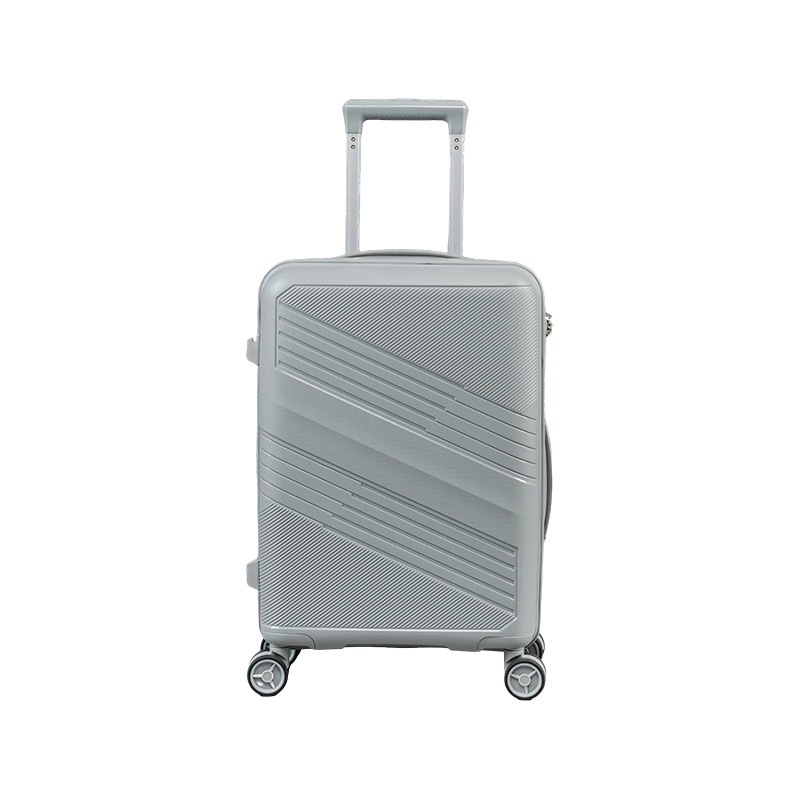


 English
 Français
 Español
 عربى
عربى
A carry-on runs out of room the moment a trip stretches past a long weekend, while a large checked case ends up half-empty and awkward to manage on a shorter trip, which is exactly the gap a medium fabric suitcase is built to close for travelers who fall between these two extremes on a regular basis. Retailers stocking only the smallest and largest sizes in a fabric luggage line frequently miss this middle segment entirely, even though it covers the trip length a large share of leisure travelers actually take. A medium fabric suitcase left out of an assortment is rarely a deliberate choice; it is more often an oversight from planning a catalog around the two sizes that photograph cleanly in a lineup.
EVA Twill Fabric Construction Behind the Soft Shell
EVA twill fabric gives a medium fabric suitcase its distinctive textured surface and the flexibility that separates soft-shell luggage from a rigid ABS or PP shell, since the ethylene-vinyl acetate material compresses slightly under pressure rather than cracking the way a hard shell can. The small twill weave pattern pressed into the surface during production adds a dimensional, fashion-forward texture that also happens to help disguise minor surface scuffing, which matters more on a mid-size case that sees frequent handling on shorter, more frequent trips than a checked case used less often.
Why Medium Size Sits at the Center of Buyer Demand
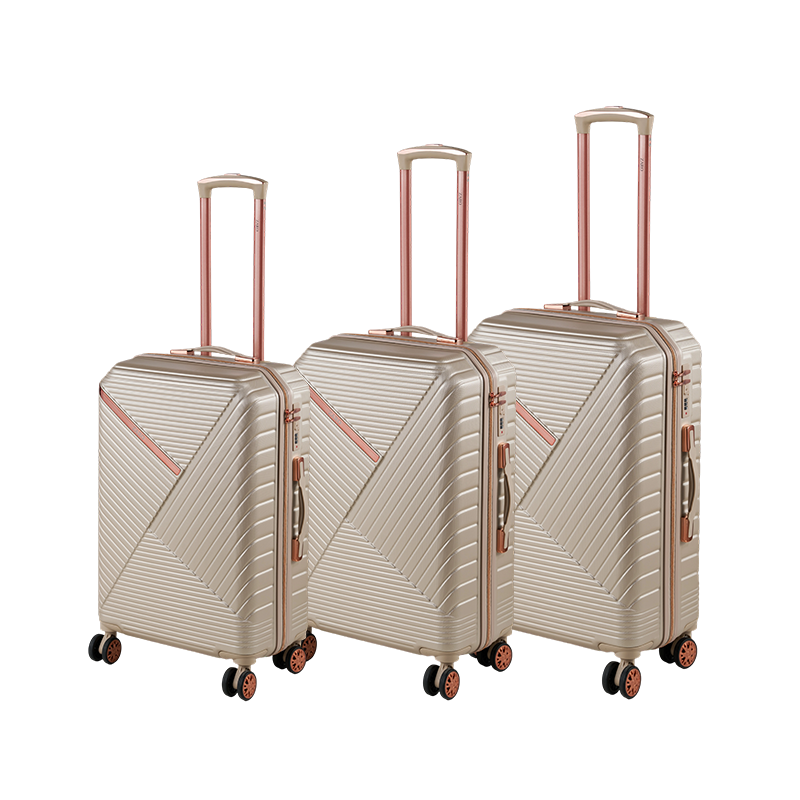
A medium fabric suitcase typically falls in the range that fits airline carry-on limits when packed light, while still expanding enough through a zippered gusset to handle a week-long trip when checked, giving retailers a single size that covers the widest range of actual travel patterns their customers report. Buyers building a fabric luggage assortment should treat this middle size as the anchor of the line rather than an afterthought squeezed between more clearly defined small and large options, since sales data across soft-shell categories consistently shows this size moving faster than either extreme. A distributor allocating shelf space or catalog pages proportionally to actual sell-through, rather than evenly across small, medium, and large, typically ends up weighting the medium category more heavily than an initial catalog plan would suggest.
Checked Luggage Capacity and Expansion Design
Checked luggage capacity on a medium fabric suitcase depends heavily on how the expansion zipper is engineered, since a poorly reinforced expansion seam is one of the more common failure points on soft-shell luggage after repeated use. A well-constructed expansion gusset adds meaningful packing volume without compromising the seam strength around the main compartment, while a cheaply reinforced version can separate at the stitching after only a season of regular travel. Buyers should ask a supplier specifically how the expansion seam is reinforced, since this detail rarely shows up in a quick visual inspection of a sample case.
Waterproofing and Surface Treatment Considerations
EVA fabric offers a degree of natural water resistance, but the surface treatment applied during production determines how well a medium fabric suitcase actually holds up in light rain or a wet luggage cart. A factory applying a consistent surface coating across a full production batch delivers more reliable water resistance than one where coating thickness varies noticeably from unit to unit, a defect that is difficult to catch without testing beyond a simple visual check. Buyers sourcing for markets with more variable weather conditions should ask how water resistance is tested during quality control, not just described on a spec sheet.
Customization, Certification, and Bulk Supply for Private-Label Buyers
Buyers building a private-label collection around a medium fabric suitcase typically request custom twill colors, an adjusted logo placement, or a modified interior lining to match a specific brand identity, and a factory that incorporates these requests into its regular production workflow tends to deliver more consistent quality across the customized run than one treating every variation as a separate project. Certification relevant to textile and material safety standards for the destination market should be confirmed before committing to volume, and buyers should also request the factory's production capacity for a medium fabric suitcase order specifically, since demand for this size segment often outpaces smaller and larger sizes during peak ordering seasons.
 Previous